Yellow or dull boxwood: box tree moth, blight, and recolouring what lives
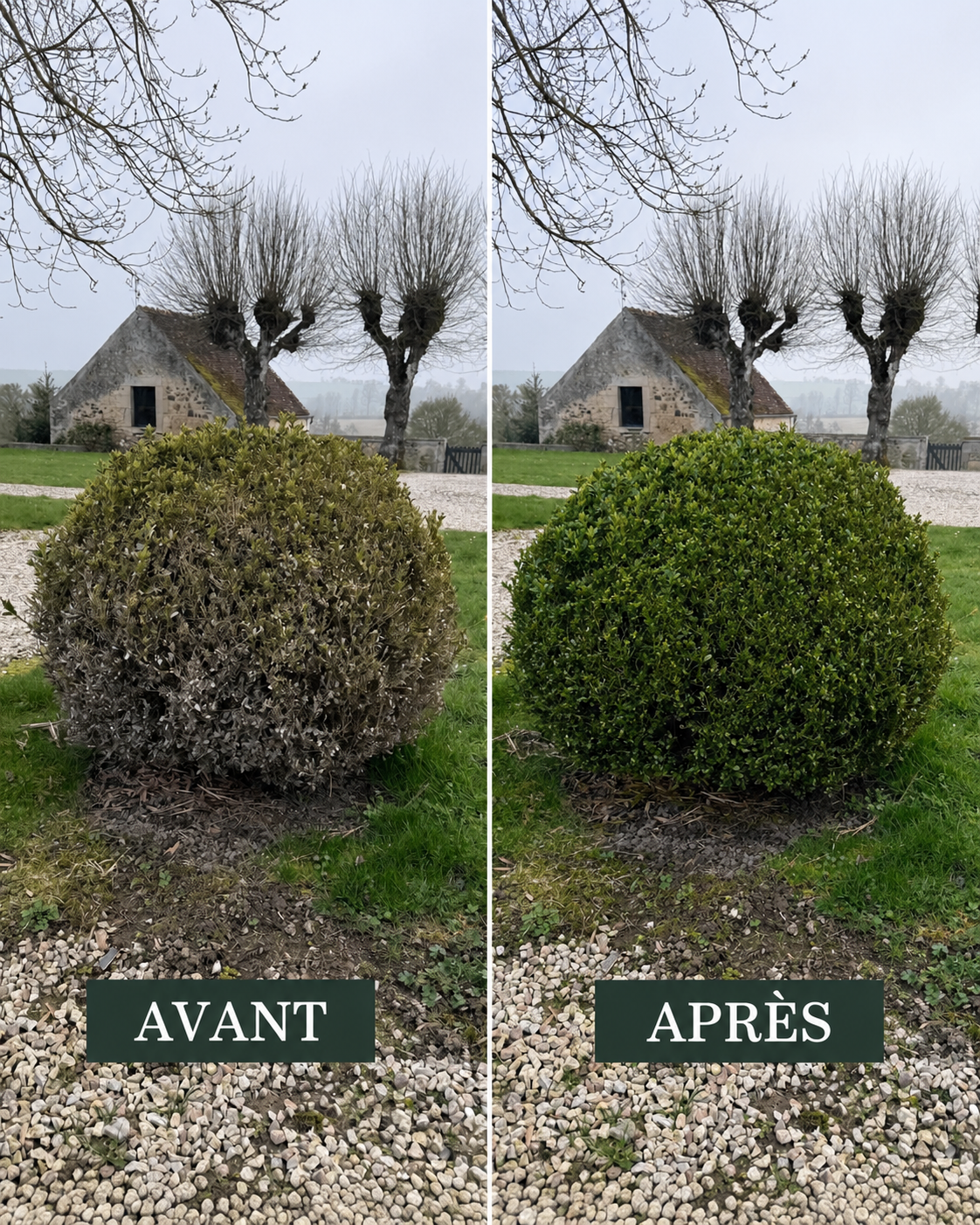
A boxwood that yellows or thins out is most often suffering from box tree moth (caterpillars and silk webbing), from blight caused by a fungus (brown leaves, black streaks on the stems) or from a lack of water. Deal with the cause first. A colorant treats nothing: it only recolours foliage that is still alive, once the problem is under control.
Box tree moth, fungus or lack of water: recognising the cause
Three problems give a yellow, brown or thinning boxwood, and they are not managed in the same way. The table below sums up the signs; the details follow.
| What you see | Likely cause |
|---|---|
| Silk webbing, green caterpillars with black heads, chewed leaves, dark green droppings at the base | Box tree moth |
| Leaves that turn brown and fall, black streaks on young stems | Blight caused by the fungus Cylindrocladium |
| Tips dying back, foliage yellowing in clumps, salmon-pink masses under the leaves | Volutella, another form of dieback |
| Dull or browned foliage with none of these signs, after a dry summer | Growing conditions, lack of water |
Box tree moth
This moth from Asia was detected in France in 2008, in Alsace, then spread to most regions, according to INRAE's Ephytia fact sheet. Its caterpillars eat the leaves, then the green bark of the shoots, until only the wood is left; several successive generations can kill a healthy boxwood in one season. The risk period runs from March to October, with two to three generations a year. The caterpillar has a shiny black head and a light green body striped with dark green. It spins webs between the leaves and leaves a lot of dark green droppings at the base. Young caterpillars spend the winter sheltered in cocoons of leaves and silk.
Box blight
The fungus Cylindrocladium buxicola is one of the main causes of leaf and shoot dieback in boxwood, INRAE states. It develops from April to October, at around 25 °C, when the leaves stay wet with dew, mist or rain, and its spores survive for several years in the soil. The Royal Horticultural Society (RHS) describes leaves that turn brown and fall, bare patches and black streaks on young stems; in damp weather, white masses of spores appear under the leaves. Another fungus, Volutella, makes shoots die back from their tips and then yellows the foliage in clumps, with salmon-pink masses under the leaves, according to the SaveBuxus national programme.
Lack of water and growing conditions
With no caterpillar or spot, brown leaves on a shrub often come from its surroundings, the RHS points out, and can be corrected by keeping an eye on watering, drainage and shelter from the wind.
Deal with the cause first
Against box tree moth, the RHS recommends inspecting boxwood often from early spring, then monitoring it from May, because females from elsewhere can lay eggs even on a boxwood spared until then. Where feasible, remove the caterpillars by hand. Pheromone traps show whether moths are flying in the area and when. Birds, wasps, spiders and parasitic flies also attack the caterpillars. For a treatment, ask a professional or a garden centre for advice. Where control becomes impossible, the RHS advises replacing boxwood with another edging shrub.
Against blight, the RHS stresses early diagnosis, then cutting out affected parts, on lightly affected boxwood or plants you want to save. The fungus survives for up to six years on fallen leaves.
A boxwood that has lost its leaves is not necessarily lost. After a light box tree moth attack, it can grow new leaves; it generally leafs out again the following season, but the moth often attacks during this regrowth and some shoots may die back, notes France's Forest Health Department. To find out whether a shoot is alive, scratch the bark lightly: green or cream underneath, it is alive; brown and brittle, it is dead.
Recolouring a dull boxwood: only what is still alive
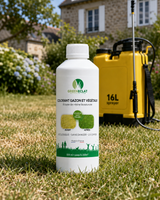
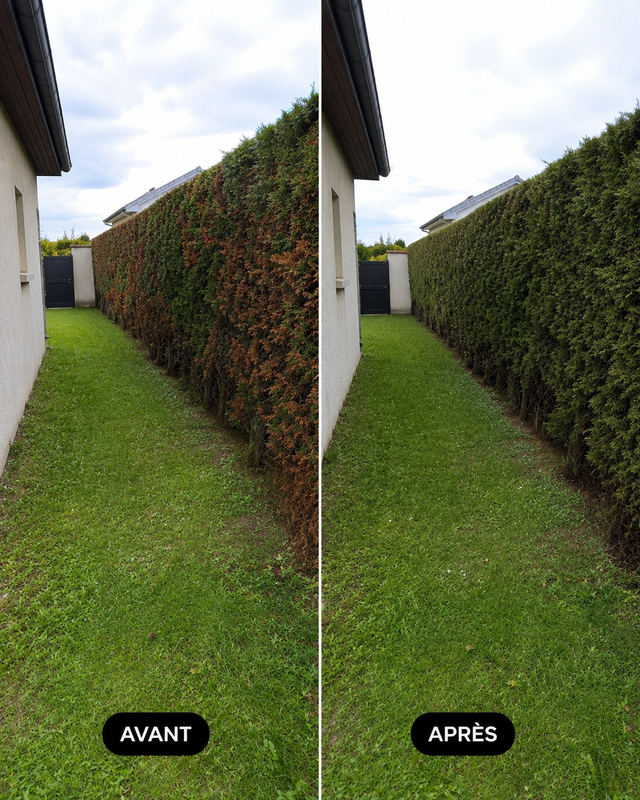
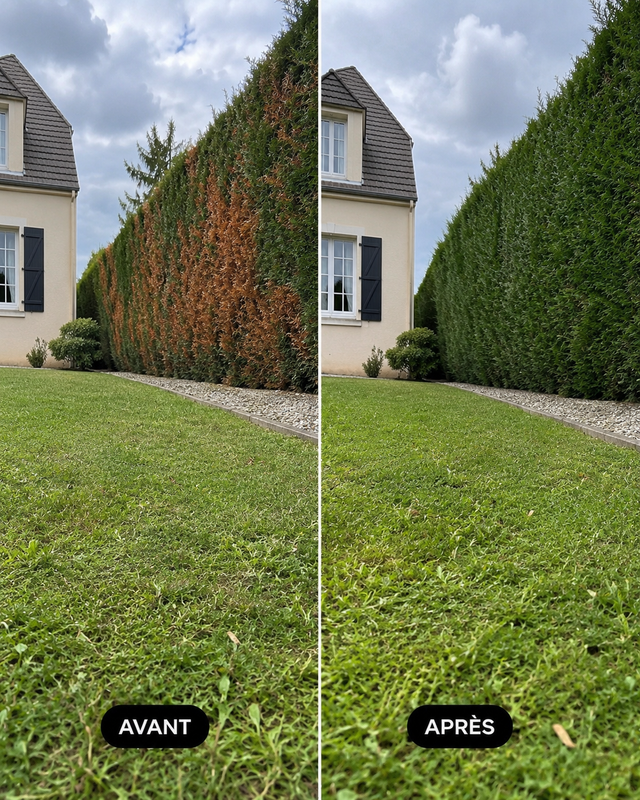
Once the cause is under control, you are often left with a boxwood that is alive but pale, yellowed or uneven, and that will take months to get its colour back. That is where a colorant has a role. Greeneclat, formulated with organic pigments, a 98% bio-based plant resin and water, recolours the existing foliage, and the boxwood keeps living and growing. What people often search for under the name grass paint or hedge paint corresponds to this type of product; our guide explains how it works.
- Shade: Meadow Green, lighter and fresher, recommended for boxwood.
- Dilution: 1:30, that is one volume of concentrate for about 30 volumes of water.
- Durability: 6 to 12 months, the colour fading gradually with trimming and time.
- Quantity: an edging 12 m long, 50 cm high and 40 cm thick represents about 17 m² of foliage, both faces and the top included. The 500 mL Meadow Green concentrate, which treats up to 100 m² of hedge, covers it easily, and the rest will do for touch-ups. For a few balls or a touch-up, the 750 mL Meadow Green ready-to-use spray avoids dilution; its product page states about 10 m², a figure given for lawns.
Application follows the same rules as for a hedge: dry foliage, no wind, 8 hours without rain after spraying, two light passes rather than one heavy one, children and pets kept away until dry. The step-by-step is in our guide recolouring a thuja hedge. Recolour after trimming, and once the caterpillars have been removed: leaves eaten the following week would take their colour with them. For a laurel hedge losing its colour, see our article on laurel turning yellow.
What the colorant does not do on a boxwood
Greeneclat does not treat box tree moth: it does not kill the caterpillars and does not protect the boxwood from a new attack. Nor does it act on blight, and it does not make a leafless boxwood grow back; where only wood is left, there is nothing to recolour. It is neither a fertiliser nor a plant protection product. It gives colour back to living foliage, which is only worthwhile once the boxwood is out of danger.
Frequently asked questions
Does Greeneclat treat box tree moth?
No. It does not kill the caterpillars and does not protect the boxwood. It only improves the appearance of the living foliage that remains, once the moth has been brought under control by other means: monitoring from spring, removing caterpillars by hand, a professional's advice on treatment.
Does a boxwood eaten by box tree moth grow back?
Often, if the attack was not too severe: the boxwood generally leafs out again the following season, but the moth often returns during this regrowth and some shoots may die back (Forest Health Department, Ephytia). Check that the shoots are alive by scratching the bark. The colorant, for its part, does not make anything grow back.
Which shade should I choose for boxwood?
Meadow Green, lighter and brighter, suits the fresh look expected of a boxwood. Test it on an inconspicuous area and judge the colour once dry; if in doubt, send us a photo by WhatsApp.
Can a boxwood with blight be recoloured?
Only its living parts, after cutting out the affected shoots. The colorant does not act on the fungus: colouring a boxwood that is still diseased hides the problem without solving it, and the affected leaves will keep falling.
How long does the colour last on boxwood?
From 6 to 12 months, as on hedges and thujas. The effect fades gradually with time, weather and trimming, which removes part of the coloured foliage.
For an edging or a few plants, the 500 mL Meadow Green concentrate is the right format, dispatched within 48 hours. Send us a photo of your boxwood by WhatsApp: we will tell you whether there is enough living foliage left for recolouring to be worthwhile, and at what dilution. Choosing the shade is covered on our page which shade to choose.