Hedge paint for thujas: recolouring a dull hedge with a colorant
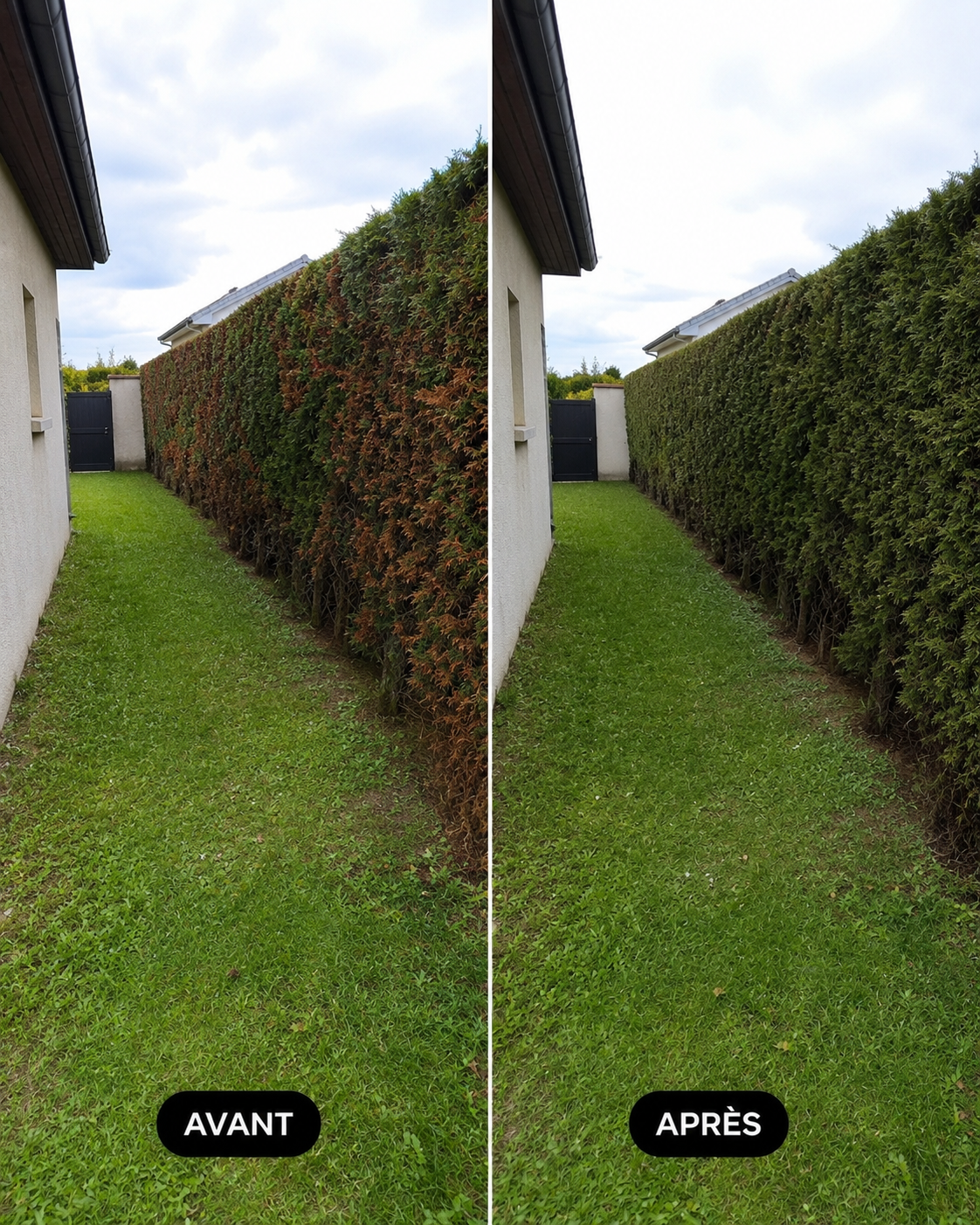
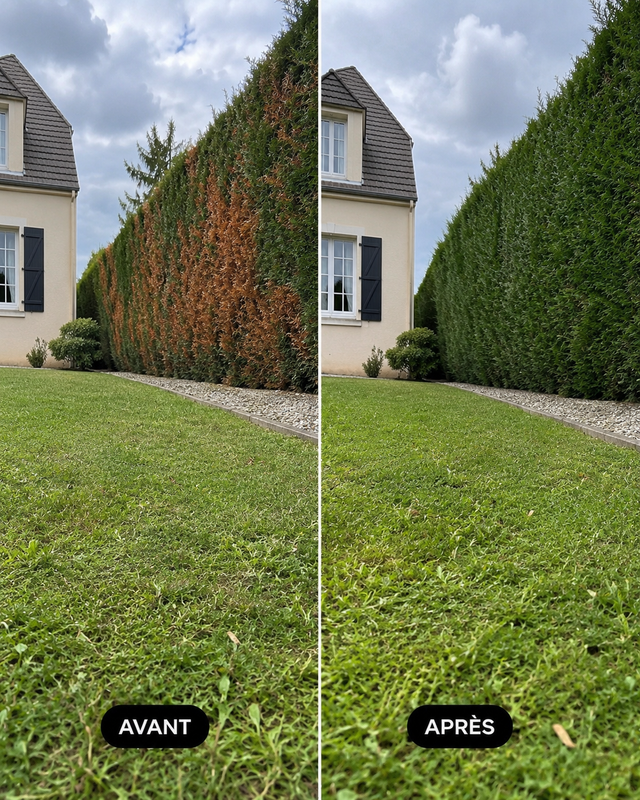
What is called hedge paint or thuja paint is, at Greeneclat, a colorant: diluted at 1:30 and sprayed on dry foliage, it gives a deep green back to dull thujas, cypresses and conifers, for 6 to 12 months. It recolours living foliage; a brown, dry, dead part cannot be saved.
Hedge paint or colorant: what you spray on your thujas
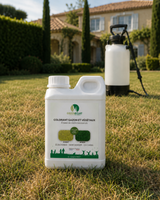
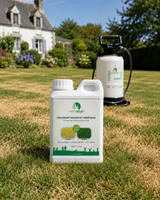
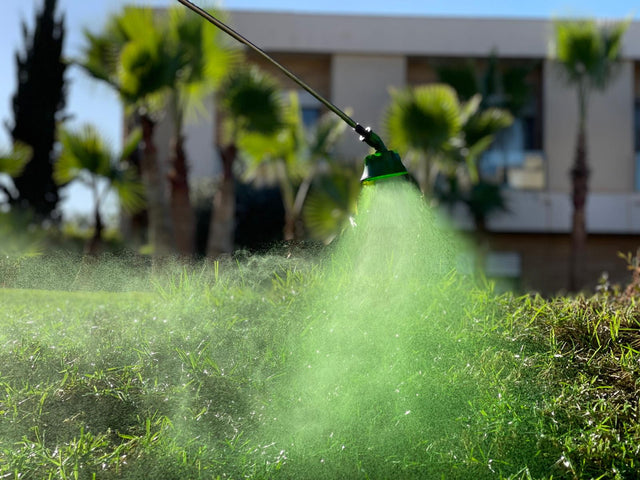
The word paint comes up in searches because the action looks similar: you spray, and the hedge turns green again. The product itself is a colorant. Greeneclat is formulated with organic pigments, a 98% bio-based plant resin and water. The resin binds the pigments to the foliage, which keeps living and growing, with no plastic film. The differences between the two families of products are covered in our article lawn paint or lawn colorant: the difference.
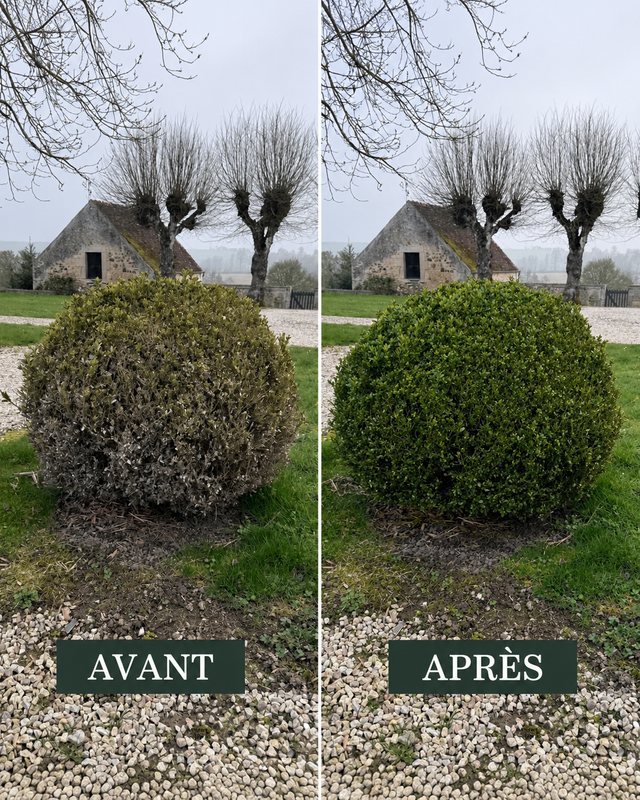
On a hedge, the colour lasts longer than on a lawn: 6 to 12 months, against 2 to 3 months on turf that loses it with mowing. A hedge is only trimmed a few times a year, and the coloured foliage stays in place between two trims. The colorant is used on thujas, cypresses, conifers, boxwood, laurels and evergreen shrubs. It is not suitable for vegetable patches, edible or flowering plants, wood, or dead foliage.
When to recolour a hedge, and when to do something else
Recolouring answers a problem of appearance on a living hedge. Before ordering, look at what is causing the colour.
- Yellowing inside the hedge in autumn: the oldest leaves are falling, a normal renewal. Wait.
- Browning after a dry summer: water at the base if local restrictions allow. The colorant can hide dull areas while you wait for new shoots.
- A hole after pruning into old wood: conifers do not regrow from it, or barely, according to the Royal Horticultural Society. There is nothing to colour where there are no leaves left.
- Dry, brittle shoots: that part is dead and needs cutting out.
- A hedge that is dull, discoloured or uneven but alive, before a sale, a reception or for the view from next door: this is the case where the colorant helps.
To recognise a living part (the bark scratch test) and the causes of browning, see our article thuja turning yellow or brown.
Which shade for a hedge
There are two shades, at the same price, and they can be mixed. For thujas, cypresses and conifers, Forest Green gives the deep, matt green of these trees. For boxwood, the product page recommends Meadow Green, lighter and fresher. For laurel, both suit depending on the look you want, deep or fresh; test it on a small area, because the result depends on the condition and surface of the leaves. Our page which shade to choose covers all the cases. If your cypresses are turning yellow or brown, our article on cypress turning yellow helps you find the cause before recolouring.
How much colorant for a hedge
A hedge is calculated in area of foliage, not in metres of length. For a hedge treated on both faces and the top, the area is: length × (2 × height + thickness). Coverage on hedges is 200 m² per litre of concentrate. Two examples, worked out by our calculation tool with the prices including VAT on the product pages and bottles bought whole:
- Hedge 20 m long, 1.80 m high and 60 cm thick: 84 m². One 500 mL Forest Green concentrate is enough (up to 100 m² of hedge), at €69.99, that is €0.83 per m².
- Hedge 30 m long, 2 m high and 80 cm thick: 144 m². The 1 L Forest Green concentrate (up to 200 m² of hedge, free delivery in France) comes to €89.99, that is €0.62 per m². Two 500 mL bottles would cost €139.98.
For other areas, lawns included, follow the method in our article how much colorant for my lawn.
Recolouring a thuja hedge, step by step
- Choose a dry, windless day, with 8 hours without rain forecast after application. The foliage must be dry: wait until the dew has gone.
- Protect or avoid nearby walls, fences, paving, cars and furniture. A splash rinses off with water before it dries; once dry, it comes off less easily.
- Shake the container of concentrate, then dilute at 1:30: one volume of concentrate for about 30 volumes of water, that is about 24 mL of concentrate per fill of a 750 mL bottle, or about 65 mL topped up with water to 2 L in a 2 L sprayer.
- Test on an inconspicuous area and let it dry: the colour is judged once dry.
- Spray in even passes, without lingering in one place, shaking the sprayer from time to time. Two light passes give a more even result than a single overloaded pass.
- Keep children and pets away during application and until dry: under 2 hours in usual conditions, 2 to 3 hours in summer.
- Rinse the sprayer, lance and nozzle with clean water.
Choosing the device and the doses per fill are covered in our article which sprayer to apply a colorant.
How long the colour lasts on a hedge
Allow 6 to 12 months. The effect fades gradually with time, weather and wear; it does not disappear all at once. Each trim removes part of the coloured foliage: so recolour after trimming rather than before. After that, local touch-ups are often enough to keep a hedge even.
What the colorant does not do
Greeneclat recolours living foliage. It does not feed the hedge and is not a fertiliser; it acts on no pest and no disease, and aphids, fungi or root diseases are dealt with separately. It does not make a bare area grow back and does not replace the watering a thuja needs to live. On the regulatory side: no pictogram, no CLP classification element, a safety data sheet free of any hazard, available on request.
Frequently asked questions
Can you put paint on a thuja?
For a living hedge, use a colorant rather than a paint. Greeneclat is diluted in water, sprayed on dry foliage and lets the thuja live and grow, with no plastic film. Allow 8 hours without rain after application and the Forest Green shade, suited to conifers.
How long does the colour last on a hedge?
From 6 to 12 months on hedges, thujas and boxwood, against 2 to 3 months on a mown lawn. The colour fades gradually with time and weather, and each trim removes part of the coloured foliage.
Should I trim before or after recolouring?
Trim first, avoiding autumn and dry periods, then recolour. You do not lose coloured foliage in the trimmings, and the colour lasts until the next trim.
Is it dangerous for the dog and children?
Once dry, the colorant is safe for children and pets. Keep them away during application and drying, under 2 hours in usual conditions. The product carries no pictogram and no CLP classification element.
Can a laurel or boxwood hedge be recoloured?
Yes. For boxwood, Meadow Green is recommended. For laurel, Forest Green gives a deep look and Meadow Green a fresher one. Test it on a small area, because the result depends on the condition and surface of the leaves. The causes of yellowing laurel are covered in our article on laurel turning yellow: causes and recolouring.
For a thuja hedge of typical size, the 1 L Forest Green concentrate covers up to 200 m² of hedge, with free delivery in France and dispatch within 48 hours. For a single face or a small hedge, the 500 mL is enough. Send us a photo of your hedge by WhatsApp: we will confirm the shade, dilution and quantity.