New lawn turning yellow: the causes on a young lawn and what to do

A new lawn turning yellow is often short of water, or getting too much: its roots are still short. Mowing too low, a blunt blade, compacted soil or turf laid too late also turn grass yellow. Fix the cause first. If the grass is alive and you want green straight away, recolour it at 1:50.
Why a new lawn turns yellow more quickly
A lawn sown or turfed within the year does not yet have deep roots. It depends on surface water, and the slightest lapse in watering shows. The Royal Horticultural Society (RHS), the major British horticultural society, points out that the only lawns to water during summer are those sown or turfed in spring. Iowa State University goes further: a lawn established within the year or the year before may not survive summer dormancy, for lack of sufficient roots. It advises not letting it go dormant.
University of Maryland Extension stresses the first two months: that is when most of the outcome is decided, and failures often come from a lack of care after sowing.
The causes, from seed to turf
| What you see | Likely cause | What to do |
|---|---|---|
| Seedlings turning yellow then drying out in patches, pale dry surface, hot or windy weather | Lack of water | Keep the surface moist from germination until several weeks after; in drying weather, several light waterings a day |
| Yellow grass in the hollows, puddles after watering, clay soil | Too much water, roots starved of air | Stop watering before water pools or runs off; avoid watering at night in late spring and summer |
| Yellow or torn tips after the first mowing | Blunt blade, cut too low or mowing in great heat | Sharpen the blade, cut only a third of the height, wait for a cooler day |
| Turves turning yellow at the edges, joints opening | Turves drying out before they root | Water until the soil under the turf is wet; top-dress the joints |
| Rolls already yellow when laid | Turves left rolled up too long | Lay within 24 h of delivery, otherwise unroll the turves flat |
| Isolated brown patches on former building land | Buried rubble, compacted soil | Remove the debris, loosen the soil, reseed |
| Yellow stripes or spots just after applying a product | Overdose, fertiliser burn | Rinse with water, then repair the area |
For fertiliser burn, the details are in our article fertiliser burn on the lawn: what to do. If your lawn is more than a year old, the causes are a little different: see yellow lawn: causes and fixes.
Seed: water and the first mowing
Seeds germinate in 7 to 10 days, according to the RHS. From then on, the University of Maryland asks you to keep the soil surface moist for several weeks. Wind, dry air, heat, sandy or compacted soil dry the surface out very quickly, and seedlings that have just come up can then die very quickly. In such weather, several light waterings a day may be needed. As the roots go deeper, waterings are spaced out and made heavier.
The opposite excess exists too. The same researchers describe puddles that smother or scald young plants, and seedling diseases made worse when the leaves stay wet all night. Stop watering before water pools; on clay or compacted soil, that point comes sooner.
For the first mowing, the RHS waits until the grass reaches 5 to 7.5 cm, lightly firms the soil, then cuts two or three days later, removing only a third of the height. The University of Maryland adds three rules: a sharp blade so as not to tear out the seedlings, no mowing above 32 °C, and no cutting lower than 5 cm for fescues and meadow-grass.
Turf: the first days decide
Turf gives a green lawn immediately, but it has to root into the soil beneath. The RHS advises laying it within 24 h of delivery: left rolled up, turves quickly lose colour and weaken. Lay them in a staggered pattern, joints tight, then brush a sandy mix into the joints. Water well after laying if no rain is forecast.
After that, water enough for it to pass through the turf and reach the soil. Watering that wets only the top produces shallow roots. In dry weather in high summer, the RHS reckons on one watering every 5 to 10 days. After about three weeks, pull on the grass: if the turf does not lift, it has rooted and can be mown, with the blade set high. The RHS advises against laying from mid-spring to early autumn, a period when turves root poorly and need repeated watering.
The right calendar to avoid the problem
A lot of yellowing comes from establishing the lawn in the wrong season. The RHS recommends sowing in early autumn, preferably, or in mid-spring; a spring sowing will have to be watered all summer. Turf is ideally laid in mid-autumn. Finally, a new lawn should be used as little as possible for about eight months: games and trampling slow down establishment.
Recolouring a young lawn: when and how
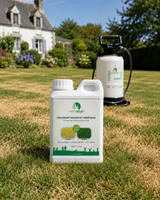
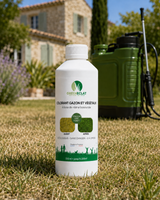
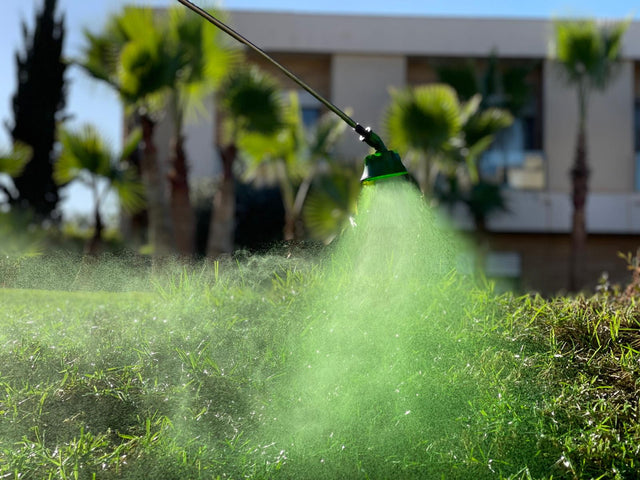
Once the cause has been fixed, living grass eventually turns green again. If you need green sooner, for a party or photos, recolouring is possible. What is often called grass paint is in fact a colorant: Greeneclat is made of organic pigments, a 98% bio-based plant resin and water, and the blades stay alive, with no plastic film.
- Wait until the lawn is established. Seedlings that have come up and already been mown, or turves that resist when you pull on them.
- Dilute at 1:50, the dilution intended for a young lawn or grass that is still green.
- Choose Meadow Green, the light shade for young lawns. Our guide which shade to choose helps you decide.
- Time the watering. You need 8 h without rain or watering after application. Water beforehand, let the grass dry, apply, then wait. The product dries in under 2 h, 2 to 3 h in summer.
- Walk on the lawn as little as possible during application, and keep children and pets away until it is dry.
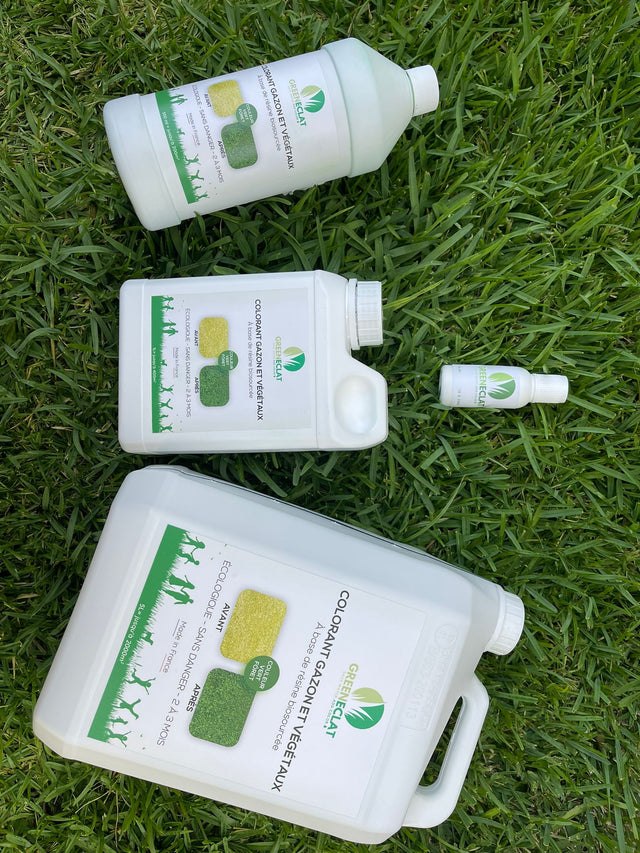
At 1:50, one litre of concentrate covers 400 m². Using the prices on the product pages, a new lawn of 150 m² takes one 500 mL bottle at €69.99, or about €0.47/m², and a lawn of 300 m² one 1 L bottle at €89.99, or about €0.30/m².
What colour does not fix
Recolouring does not feed the young lawn and does not help its roots go deeper. The colorant does not replace the watering a new lawn needs, does not make seeds germinate and does not fill in areas left bare: there, you need to reseed. It is not a fertiliser, a weedkiller, a biostimulant or a plant protection product. If the cause of the yellowing remains, the yellow will come back as the lawn is mown.
Frequently asked questions
Is it normal for new turf to turn yellow after laying?
Slight yellowing often comes from a lack of water while it roots, or from turves left rolled up too long before laying. The RHS advises laying within 24 h of delivery and keeping the turves moist until they root. If a turf resists when you pull on it, about three weeks after laying, it has taken hold in the soil.
How long should a new lawn be watered?
Keep the surface moist from germination until several weeks after, according to the University of Maryland, then water less often but more deeply as the roots develop. Iowa State University advises watering lawns established within the year or the year before every week in dry weather: about 25 mm in one application or 12 mm every 3 to 4 days.
When should a new lawn be mown for the first time?
When the shoots reach 5 to 7.5 cm, according to the RHS. Lightly firm the soil, wait two or three days, then cut only a third of the height, with a well-sharpened blade. A blunt blade tears out young plants instead of cutting them.
Can grass sown a few weeks ago be recoloured?
Yes, once the seedlings have come up and been mown, at the 1:50 dilution intended for a young lawn. Choose a day when you can do without watering for 8 h: water beforehand, let the grass dry, apply, then wait 8 h. During the very first weeks, when the seedbed must stay moist all the time, it is better to wait.
The size for a young lawn
The 1 L Meadow Green concentrate covers up to 400 m² of young lawn diluted at 1:50, with free delivery from 1 L (France) and dispatch within 48 h. Up to 200 m², the 500 mL bottle is enough. Send us a photo of your lawn by WhatsApp or through the contact page: we will help you identify the cause of the yellowing and choose the dilution.